Buy americotest.eu ?
We are moving the project
americotest.eu .
Are you interested in purchasing the domain
americotest.eu ?
domain@kv-gmbh.de · 0541-91531010
Buy americotest.eu ?
What is the fuel efficiency of a gasoline engine?
The fuel efficiency of a gasoline engine is typically measured in miles per gallon (MPG) or liters per 100 kilometers (L/100km). This measures how far a vehicle can travel on a certain amount of fuel. The fuel efficiency of a gasoline engine can vary depending on factors such as the vehicle's make and model, driving conditions, and maintenance. Generally, newer gasoline engines are designed to be more fuel efficient than older models due to advancements in technology and engineering. **
What is the fuel efficiency class of a tire?
The fuel efficiency class of a tire is a rating that indicates how well the tire can contribute to reducing fuel consumption. It is measured on a scale from A (most efficient) to G (least efficient), with A being the most fuel-efficient class. Tires with a higher fuel efficiency class can help improve a vehicle's fuel economy and reduce carbon emissions. It is an important factor to consider when choosing tires for your vehicle. **

Similar search terms for Fuel efficiency
Top-Angebote
Products related to Fuel efficiency:
-
MOTAQUIP VFF113 Fuel filterFilter type: In-Line Filter; Height: 72; Outer Diameter [mm]: 87; Inner Diameter [mm]: 19; Manufacturer Restriction: CAV, CAV,Delphi, Delphi, Lucas, CAV, Delphi, TRW; Construction Year to: 12/1992, 09/1985, 09/1983, 08/1999, 09/1995; TecDoc Engine Number: 5013, 2802, 2803, 2805, 2806, 9391, 5044, 5525, 2890, 4831, 2887; Construction Year from: 08/1977, 07/1981, 09/1982, 04/1983, 08/1979, 01/1976; Engine Code: J8S778, MIDR 06.02.12, 26, MIDS 06.02.12 C, 797-21, XUD9, DJ5T, DJ5TED, 8144.67, SOFIM, XUD9TF, DJ5; Fuel Mixture Formation: Petrol Injection7,29 £*Shipping: 8,45 £Secure redirect to the provider
-
DELPHI EFP204 Fuel filterDiameter: 83; Filter type: In-Line Filter; Height: 171; Construction Year to: 07/2001, 10/2005, 12/2004, 05/2011; for model code: 2 Pipe Fitting; TecDoc Engine Number: 11927, 18137, 15485; Construction Year from: 01/2001; Vehicle type: 2 Pipe Fitting, Bora, Bora Estate/Variant; Engine Code: APK/AQY/AZG/AZH/AZJ, AQY, AZG, AZH, AZJ7,29 £*Shipping: 8,45 £Secure redirect to the provider
-
RIDEX 9F0020 Fuel filterDiameter: 74; Length [mm]: 124; Thread Size: 3/4-16 UNF-2B; Thread Size 2: M36x1.5; Filter type: Filter Insert; Fuel Type: Diesel; Construction Year from: 03/1996, 03/1998, 10/1996, 09/2001, 04/2003, 10/2001, 10/2002, 04/1999, 08/1998, 02/2009, 11/2013; Vehicle type: Carina E, Carina, Verso S, Ractis, Picnic, Ipsum, 323, Familia, Hilux, Hilux Tiger, 323F, Avensis Verso, Sportsvan, Yaris, Vitz, FunCargo, Yaris Verso, 6, Atenza; Construction Year to: 06/2000, 04/2001, 09/2001, 01/2001, 07/2001, 04/2002, 08/2002, 03/2000, 10/2002, 10/2003, 05/2004, 04/2003, 04/2006, 10/2006, 08/2001, 03/2010; Engine Code: RF3F; TecDoc Engine Number: 18213, 184835,59 £*Shipping: 8,45 £Secure redirect to the provider
-
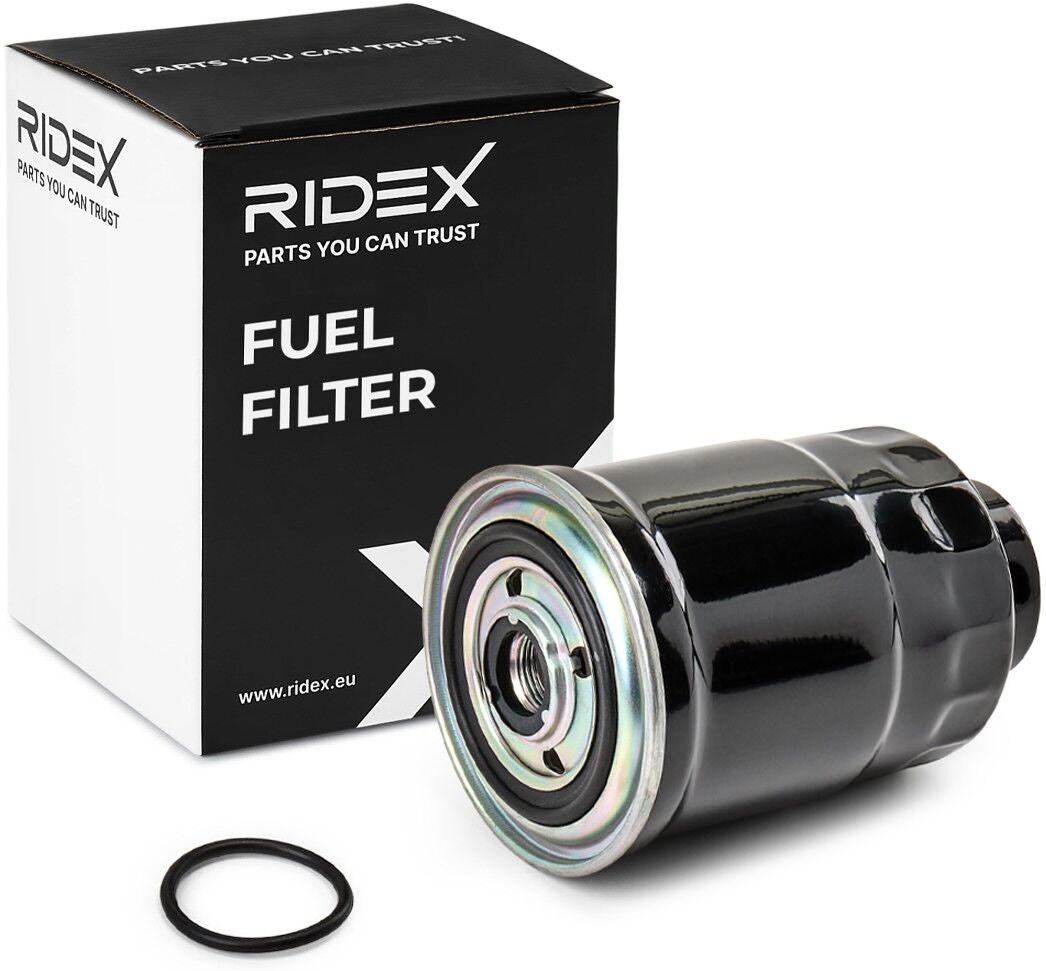
RIDEX 9F0072 Fuel filterFilter type: Spin-on Filter, with connection for water sensor, In-Line Filter; Diameter: 86; Height: 138,7, 140; Diameter 2 [mm]: 62,5; Seal Ring Diameter [mm]: 56,5; Tightening Torque [Nm]: 14; Net Weight [g]: 403; Entry Thread Size: M36X1.5; Supplementary Article / Supplementary Info Info 2: with seal ring; Fuel Type: Diesel; Exit Thread Size: 3/4-16 UNF-2B; Construction Year to: 06/2015, 07/1997, 02/1996; Construction Year from: 03/2005, 09/1985, 09/19845,59 £*Shipping: 8,45 £Secure redirect to the provider


-
What is the relationship between efficiency and fuel consumption in physics?
In physics, the relationship between efficiency and fuel consumption is often described by the concept of energy conversion. Efficiency is a measure of how well a system converts input energy into useful output energy, while fuel consumption is a measure of the amount of fuel needed to produce a certain amount of energy. Generally, higher efficiency means lower fuel consumption, as a more efficient system requires less fuel to produce the same amount of energy output. This relationship is important in designing and optimizing energy systems, such as engines and power plants, to minimize fuel consumption and maximize energy efficiency. **
-
How do stricter environmental regulations requiring higher fuel efficiency affect the automotive industry?
Stricter environmental regulations requiring higher fuel efficiency in the automotive industry can have both positive and negative impacts. On one hand, it can drive innovation and the development of more fuel-efficient technologies, leading to cleaner vehicles and reduced emissions. However, it can also increase production costs for automakers, potentially leading to higher prices for consumers. Additionally, it may require significant investments in research and development to meet these regulations, which could impact the profitability of some companies. **
-
What is the fuel consumption with an efficiency of 30% and a quantity of 10 liters of gasoline?
With an efficiency of 30%, only 30% of the energy in the gasoline is actually used to power the vehicle. This means that 70% of the energy is lost as heat. So, out of the 10 liters of gasoline, only 3 liters (30% of 10 liters) are actually used to power the vehicle. The remaining 7 liters are wasted as heat. **
-
How do I calculate the efficiency of my car based on the work done and the fuel consumed?
To calculate the efficiency of your car, you can use the formula: Efficiency = (Work done) / (Fuel consumed). First, you need to measure the work done by your car, which can be calculated by multiplying the force applied to the car by the distance it travels. Then, measure the fuel consumed by your car in liters or gallons. Finally, divide the work done by the fuel consumed to get the efficiency of your car. This will give you a measure of how effectively your car is using fuel to perform work. **

What is the efficiency of a space heater with 100% efficiency?
A space heater with 100% efficiency would convert all the electrical energy it consumes into heat, making it extremely efficient. This means that all the energy input is converted into useful output, with no waste. However, it's important to note that achieving 100% efficiency in real-world devices is extremely difficult due to factors such as heat loss and other inefficiencies in the system. **
Can you help me solve this task? What does fuel efficiency mean and what do I need to calculate?
Yes, I can help you solve this task. Fuel efficiency refers to the amount of distance a vehicle can travel per unit of fuel. It is typically measured in miles per gallon (mpg) for gasoline vehicles or miles per gallon equivalent (MPGe) for electric vehicles. To calculate fuel efficiency, you will need to know the distance traveled and the amount of fuel consumed during that distance. Then, you can use the formula: Fuel Efficiency = Distance Traveled / Fuel Consumed. **
Top-Angebote
Products related to Fuel efficiency:
-
Uplift Essentials N50 High Efficiency Cat Litter Deodorizer Blocks N50 High Efficiency Cat Litter Deodorizer BlocksTake control of your homes air quality with the N50 cat litter deodorizer blocks. These professionalgrade odor eliminators are engineered to neutralize stubborn ammonia and waste smells at the source, rather than just masking them with heavy...142,97 $*Shipping: 0,00 $Secure redirect to the provider
-
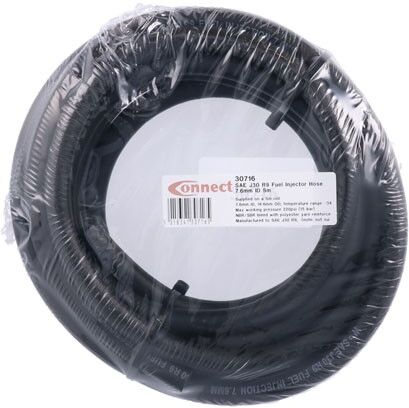
Connect 30716 Fuel HoseInner Diameter [mm]: 7,6; Outer Diameter [mm]: 14,6; Hose Length [m]: 5; Operating pressure to [bar]: 15; Fuel Type: Ethanol Blended Petrol (E10), Petrol; Material: NBR (Nitrile Butadiene Rubber)/ACM (Polyacrylic Rubber); Supplementary Article / Supplementary Info: with reinforcement; Temperature range from [°C]: -34; Temperature range to [°C]: +135; Certificate: SAE J30 R929,49 £*Shipping: 0,00 £Secure redirect to the provider
-
MOTAQUIP VFF113 Fuel filterFilter type: In-Line Filter; Height: 72; Outer Diameter [mm]: 87; Inner Diameter [mm]: 19; Manufacturer Restriction: CAV, CAV,Delphi, Delphi, Lucas, CAV, Delphi, TRW; Construction Year to: 12/1992, 09/1985, 09/1983, 08/1999, 09/1995; TecDoc Engine Number: 5013, 2802, 2803, 2805, 2806, 9391, 5044, 5525, 2890, 4831, 2887; Construction Year from: 08/1977, 07/1981, 09/1982, 04/1983, 08/1979, 01/1976; Engine Code: J8S778, MIDR 06.02.12, 26, MIDS 06.02.12 C, 797-21, XUD9, DJ5T, DJ5TED, 8144.67, SOFIM, XUD9TF, DJ5; Fuel Mixture Formation: Petrol Injection7,29 £*Shipping: 8,45 £Secure redirect to the provider
-
DELPHI EFP204 Fuel filterDiameter: 83; Filter type: In-Line Filter; Height: 171; Construction Year to: 07/2001, 10/2005, 12/2004, 05/2011; for model code: 2 Pipe Fitting; TecDoc Engine Number: 11927, 18137, 15485; Construction Year from: 01/2001; Vehicle type: 2 Pipe Fitting, Bora, Bora Estate/Variant; Engine Code: APK/AQY/AZG/AZH/AZJ, AQY, AZG, AZH, AZJ7,29 £*Shipping: 8,45 £Secure redirect to the provider
-
What is the fuel efficiency of a gasoline engine?
The fuel efficiency of a gasoline engine is typically measured in miles per gallon (MPG) or liters per 100 kilometers (L/100km). This measures how far a vehicle can travel on a certain amount of fuel. The fuel efficiency of a gasoline engine can vary depending on factors such as the vehicle's make and model, driving conditions, and maintenance. Generally, newer gasoline engines are designed to be more fuel efficient than older models due to advancements in technology and engineering. **
-
What is the fuel efficiency class of a tire?
The fuel efficiency class of a tire is a rating that indicates how well the tire can contribute to reducing fuel consumption. It is measured on a scale from A (most efficient) to G (least efficient), with A being the most fuel-efficient class. Tires with a higher fuel efficiency class can help improve a vehicle's fuel economy and reduce carbon emissions. It is an important factor to consider when choosing tires for your vehicle. **
-
What is the relationship between efficiency and fuel consumption in physics?
In physics, the relationship between efficiency and fuel consumption is often described by the concept of energy conversion. Efficiency is a measure of how well a system converts input energy into useful output energy, while fuel consumption is a measure of the amount of fuel needed to produce a certain amount of energy. Generally, higher efficiency means lower fuel consumption, as a more efficient system requires less fuel to produce the same amount of energy output. This relationship is important in designing and optimizing energy systems, such as engines and power plants, to minimize fuel consumption and maximize energy efficiency. **
-
How do stricter environmental regulations requiring higher fuel efficiency affect the automotive industry?
Stricter environmental regulations requiring higher fuel efficiency in the automotive industry can have both positive and negative impacts. On one hand, it can drive innovation and the development of more fuel-efficient technologies, leading to cleaner vehicles and reduced emissions. However, it can also increase production costs for automakers, potentially leading to higher prices for consumers. Additionally, it may require significant investments in research and development to meet these regulations, which could impact the profitability of some companies. **
Similar search terms for Fuel efficiency
-
RIDEX 9F0020 Fuel filterDiameter: 74; Length [mm]: 124; Thread Size: 3/4-16 UNF-2B; Thread Size 2: M36x1.5; Filter type: Filter Insert; Fuel Type: Diesel; Construction Year from: 03/1996, 03/1998, 10/1996, 09/2001, 04/2003, 10/2001, 10/2002, 04/1999, 08/1998, 02/2009, 11/2013; Vehicle type: Carina E, Carina, Verso S, Ractis, Picnic, Ipsum, 323, Familia, Hilux, Hilux Tiger, 323F, Avensis Verso, Sportsvan, Yaris, Vitz, FunCargo, Yaris Verso, 6, Atenza; Construction Year to: 06/2000, 04/2001, 09/2001, 01/2001, 07/2001, 04/2002, 08/2002, 03/2000, 10/2002, 10/2003, 05/2004, 04/2003, 04/2006, 10/2006, 08/2001, 03/2010; Engine Code: RF3F; TecDoc Engine Number: 18213, 184835,59 £*Shipping: 8,45 £Secure redirect to the provider
-
RIDEX 9F0072 Fuel filterFilter type: Spin-on Filter, with connection for water sensor, In-Line Filter; Diameter: 86; Height: 138,7, 140; Diameter 2 [mm]: 62,5; Seal Ring Diameter [mm]: 56,5; Tightening Torque [Nm]: 14; Net Weight [g]: 403; Entry Thread Size: M36X1.5; Supplementary Article / Supplementary Info Info 2: with seal ring; Fuel Type: Diesel; Exit Thread Size: 3/4-16 UNF-2B; Construction Year to: 06/2015, 07/1997, 02/1996; Construction Year from: 03/2005, 09/1985, 09/19845,59 £*Shipping: 8,45 £Secure redirect to the provider
-
RIDEX 9F0033 Fuel filterFilter type: Filter Insert; EU General Product Safety Regulation (GPSR): IEC 60417-6183 mechanical expertise required; Height: 116; Inner Diameter [mm]: 21.6; Outer Diameter [mm]: 84; Fuel Type: Diesel; Vehicle Identification Number (VIN) to: 2K_6_090 000, 8P_6_176000, 1T_6_047274, 2K_6_090 001, N° 8P_6_176001, 1P_6_014 785, 1P_6_014_785; Manufacturer Restriction: 1K0127400K (M+H), 1K0127400K, MANN+HUMMEL, 1K0 127 400 L, 1K0 127 400 K, 1K0 127 400 K (M+H), 1K0127400K(M+H), 1K0127400C/E/J (M+H), 1K0127400C/E/J(M+H), 1K0127434K (M+H), 1K0127434K(M+H), 1K0 127 434 B (M+H), 1K0 127 400 L (M+H); Engine Code: CFFB, CLCB, CLCA; TecDoc Engine Number: 23178; Construction Year to: 03/2006, 08/2005; Vehicle Identification Number (VIN) from: 1K_6_160001 (Golf), 1K_6_600001 (Golf Pl, 1K_6_160001, 1K_6_817 801; Construction Year from: 04/20066,99 £*Shipping: 8,45 £Secure redirect to the provider
-
RIDEX 9F0038 Fuel filterHeight: 135; Outer Diameter 1 [mm]: 96; Outer Diameter 2 [mm]: 90; Seal Ring Diameter up to [mm]: 72; Thread Size: M36x1,5, M20x1,5; Filter type: with water separator, In-Line Filter; Construction Year to: 05/1986, 11/2001; Vehicle Identification Number (VIN) from: 500 001; Construction Year from: 04/20005,59 £*Shipping: 8,45 £Secure redirect to the provider
-
What is the fuel consumption with an efficiency of 30% and a quantity of 10 liters of gasoline?
With an efficiency of 30%, only 30% of the energy in the gasoline is actually used to power the vehicle. This means that 70% of the energy is lost as heat. So, out of the 10 liters of gasoline, only 3 liters (30% of 10 liters) are actually used to power the vehicle. The remaining 7 liters are wasted as heat. **
-
How do I calculate the efficiency of my car based on the work done and the fuel consumed?
To calculate the efficiency of your car, you can use the formula: Efficiency = (Work done) / (Fuel consumed). First, you need to measure the work done by your car, which can be calculated by multiplying the force applied to the car by the distance it travels. Then, measure the fuel consumed by your car in liters or gallons. Finally, divide the work done by the fuel consumed to get the efficiency of your car. This will give you a measure of how effectively your car is using fuel to perform work. **
-
What is the efficiency of a space heater with 100% efficiency?
A space heater with 100% efficiency would convert all the electrical energy it consumes into heat, making it extremely efficient. This means that all the energy input is converted into useful output, with no waste. However, it's important to note that achieving 100% efficiency in real-world devices is extremely difficult due to factors such as heat loss and other inefficiencies in the system. **
-
Can you help me solve this task? What does fuel efficiency mean and what do I need to calculate?
Yes, I can help you solve this task. Fuel efficiency refers to the amount of distance a vehicle can travel per unit of fuel. It is typically measured in miles per gallon (mpg) for gasoline vehicles or miles per gallon equivalent (MPGe) for electric vehicles. To calculate fuel efficiency, you will need to know the distance traveled and the amount of fuel consumed during that distance. Then, you can use the formula: Fuel Efficiency = Distance Traveled / Fuel Consumed. **
* All prices are inclusive of VAT and, if applicable, plus shipping costs. The offer information is based on the details provided by the respective shop and is updated through automated processes. Real-time updates do not occur, so deviations can occur in individual cases. ** Note: Parts of this content were created by AI.